

At a glance
- Storage handles volume. Biological conversion is a complementary route for selected streams, turning part of the CO₂ into outputs that can be used on site or sold.
- The product decides the economics. Recent research shows that output choice, more than capture volume, determines whether biological conversion pays.
- Gross capture is not the climate benefit. Electricity supply, carbon source and the product's end use determine the lifecycle result.
- A good pilot answers an investment question: is the stream reliable, is the output saleable, and is the environmental benefit defensible at an acceptable cost?
Why the question is arriving now
Carbon management in the Gulf has moved from ambition to infrastructure. ADNOC's 2025 Sustainability Report describes CCUS as central to its decarbonisation strategy, reports progress on Habshan and Hail and Ghasha, and notes that Abu Dhabi's Carbon Capture Policy, launched in January 2026, covers permitting, storage standards, long-term liability and investment facilitation. [1]
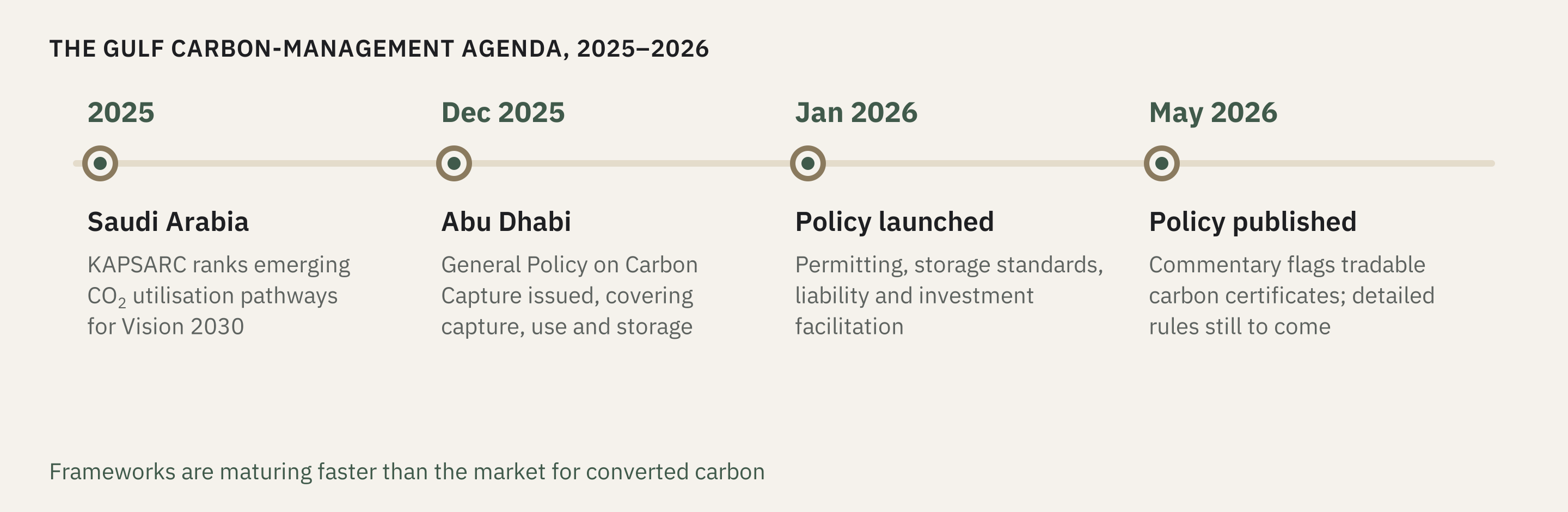
Figure 1. Regional frameworks now cover capture, use and storage. Sources: KAPSARC; Abu Dhabi SCFEA; Global CCS Institute. The May 2026 milestone refers to the Institute’s policy commentary. [5] [2] [3]
Text version
A carbon-management timeline: KAPSARC assesses utilisation pathways in Saudi Arabia in 2025; Abu Dhabi issues its General Policy on Carbon Capture in December 2025 and launches it in January 2026; the Global CCS Institute publishes commentary in May 2026. These are policy developments, not ALIUM installations.
The policy frames the industry broadly, from capture to utilisation, transport and storage, and lists the development of innovative capture technologies among its objectives. [2] That raises a practical question. Once a site has a storage route for its large, concentrated streams, what should it do with the smaller, dispersed or awkward ones, such as heater stacks, boilers, fermentation off-gas or biogas, that are expensive to compress and pipe to a hub?
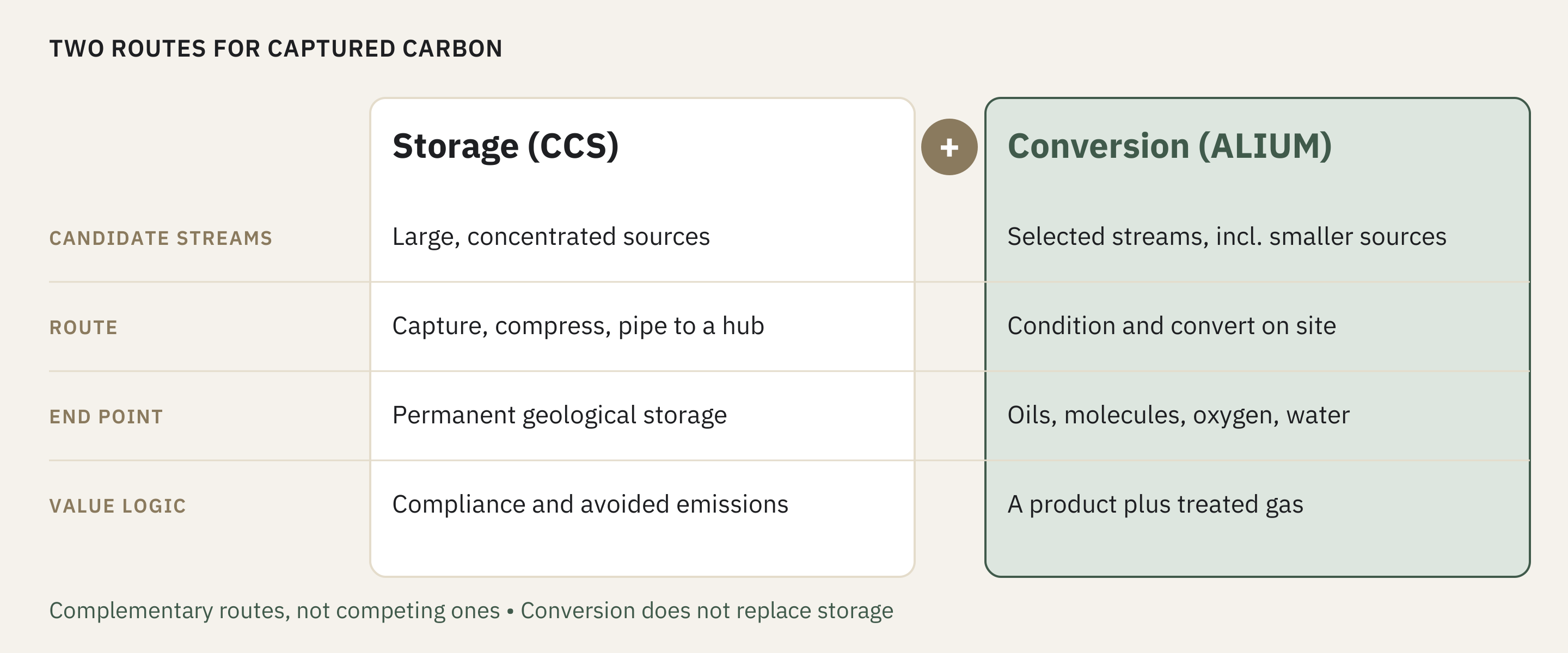
Figure 2. Storage and conversion answer different questions. Amanah editorial framework.
Text version
Two complementary routes. Storage captures, compresses and transports CO₂ for permanent geological storage. Conversion conditions and converts selected streams on site, with potential outputs including oils, molecules, oxygen and water. Product use and net climate benefit require separate assessment.
Conversion does not replace storage. It makes selected streams produce something of value on site.
How ALIUM works
ALIUM, developed by SYKLEA, is a modular carbon capture and valorisation platform. It conditions an incoming gas stream, passes it through a controlled humid environment where microalgae grow on supports and fix CO₂ through photosynthesis, then recovers the useful outputs. [4]
Configurations exist for combustion gases and for CO₂ streams from fermentation, biogas and biomethane. Depending on the configuration, recoverable outputs include oils, biomass-derived molecules, oxygen and water. The design also targets treatment of selected flue-gas pollutants and supports water recovery, so one installation could take on several duties at a host site, each verified on its own terms.
Deployment is staged. A containerised pilot connects to the customer's own gas stream, and the measured results inform the industrial design, putting site evidence ahead of capital commitment.
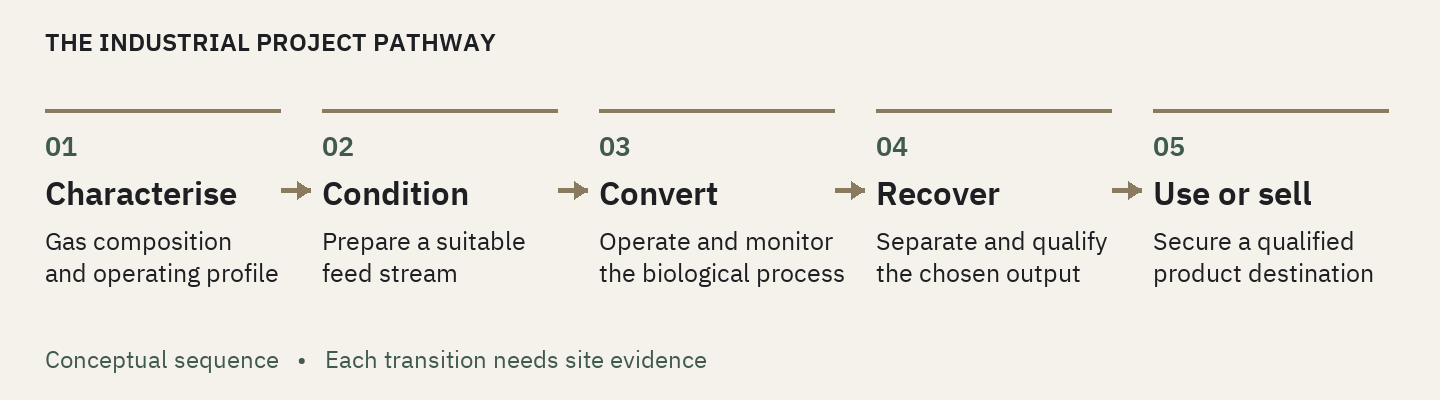
Figure 3. From emission stream to product. Each transition is a decision point that needs evidence from the host site.
Text version
The industrial project pathway has five stages: characterise gas composition and operating profile; condition the feed stream; operate and monitor biological conversion; recover and qualify the selected output; secure a qualified destination for sale or use. Every transition requires site evidence.
Where it fits in an NOC estate
Refineries, gas-processing complexes and petrochemical sites combine what a conversion project needs: emission streams, utilities, laboratories, maintenance teams and potential customers within the fence line or the neighbouring industrial zone. A usable output could replace a purchased input or anchor a supply relationship with a nearby plant.
Screening should start with the stream, not the technology. Gas-fired sources deserve early attention: a 2025 US study ran a pilot photobioreactor directly on flue gas from natural gas or biogas combustion at 3–5% CO₂, avoiding a separate CO₂ separation step. [7]
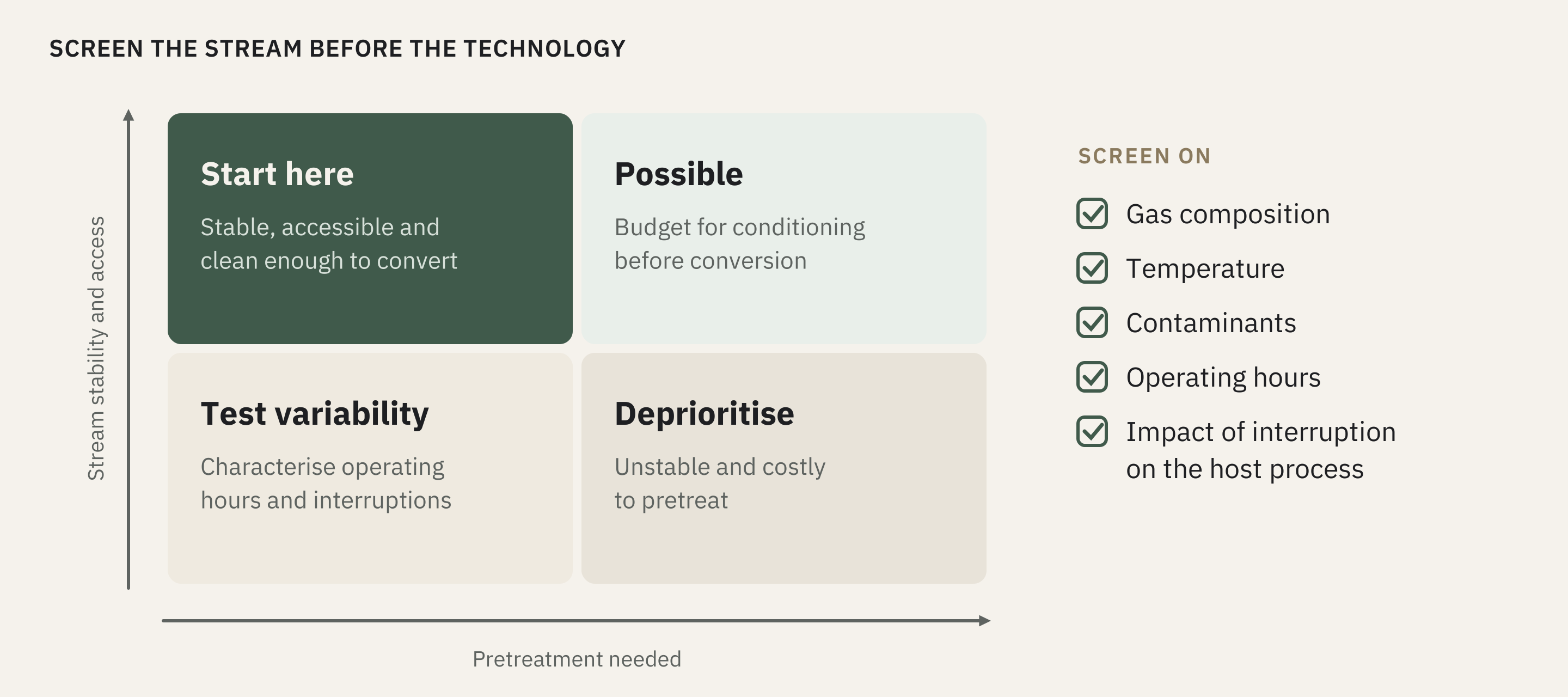
Figure 4. Start where the stream is stable, accessible and clean enough to convert. Amanah editorial framework.
Text version
A conceptual screening matrix compares stream stability and access with pretreatment needs. Prioritise stable, accessible streams that need less conditioning. Budget for conditioning, characterise variability and interruptions, and deprioritise unstable streams that are costly to treat. Check composition, temperature, contaminants, operating hours and host-process impacts.
The same logic applies beyond oil and gas. Municipal utilities with wastewater or biogas operations, and industrial parks with a combustion-based energy centre, can host a project if the emission source is physically accessible and controlled by a willing partner. An office tower without a local gas stream is a different proposition.
What the research says: the product decides
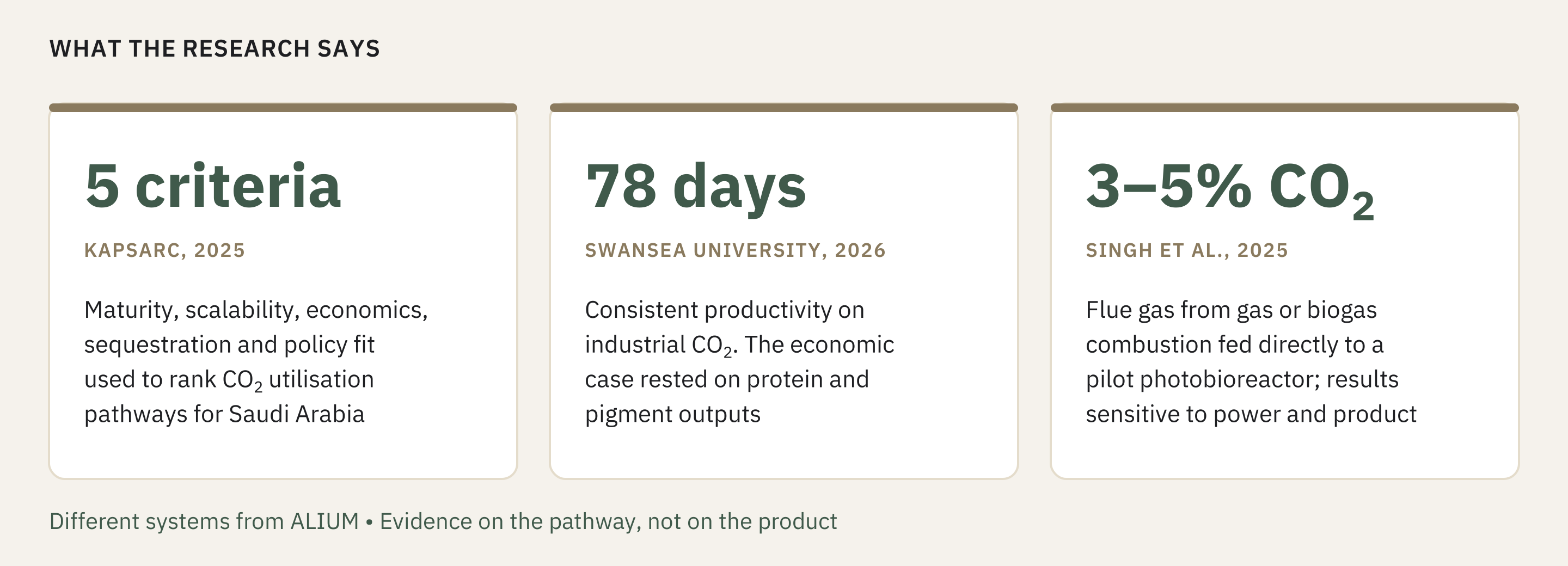
Figure 5. Three studies, three lessons. None evaluates ALIUM itself. [5] [6] [7]
Text version
Three research findings from different systems: KAPSARC compares five criteria for utilisation pathways; the Swansea reactor study covers 78 days and examines protein and pigment economics; Singh and colleagues study flue gas at 3–5 percent CO₂ and analyse sensitivity to power and product choices. None evaluates ALIUM itself.
KAPSARC's 2025 multi-criteria assessment ranks emerging CO₂ utilisation pathways for Saudi Arabia on technical maturity, scalability, economic feasibility, carbon sequestration potential and policy alignment. It sets the right test for any biological route: show maturity and cost at the site, not in the brochure. [5]
A 2026 Swansea University study fed industrial CO₂ to a low-cost, LED-lit reactor and sustained consistent productivity across 78 days. Its economic case rested on protein and pigment outputs, with an estimated payback of under two years under the authors' assumptions. The organism, reactor and climate differ from ALIUM in a Gulf setting, but the lesson transfers. [6]
Product selection, more than capture volume, determines whether biological conversion pays.
The 2025 flue-gas study adds the climate caveat. Its results were sensitive to the carbon source, the electricity supply and the product pathway. When biomass becomes fuel, the carbon returns to the atmosphere on combustion. Gross capture, product revenue and lifecycle emissions reduction are three different numbers. [7]
A business case that survives scrutiny
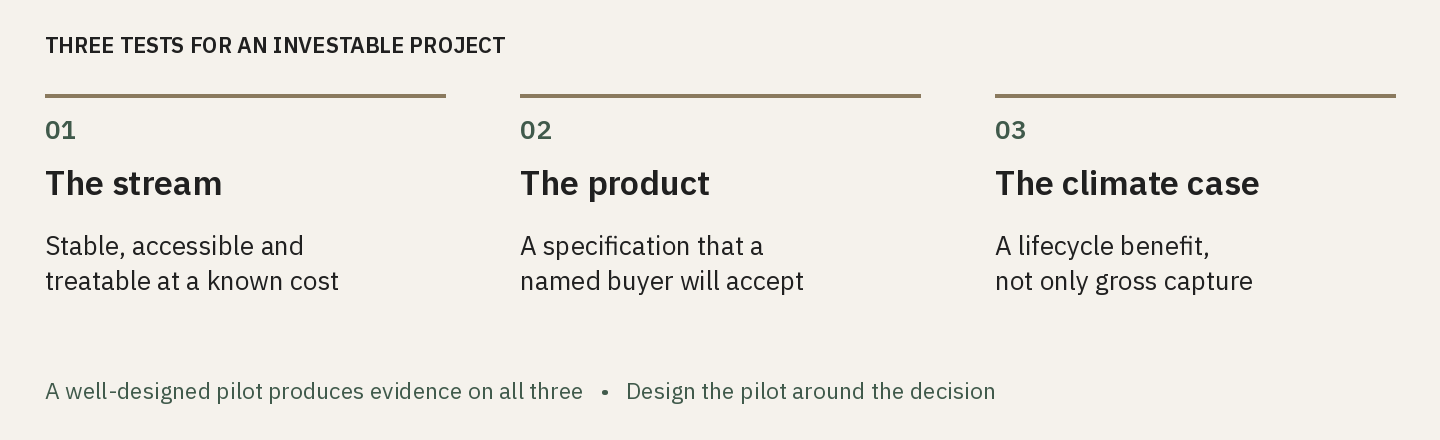
Figure 6. The three questions an ALIUM business case has to answer. Amanah editorial framework.
Text version
Three tests for an investable project: a stable, accessible stream treatable at a known cost; a product specification accepted by a named buyer; and a lifecycle climate benefit extending beyond gross capture. Design the pilot to produce evidence on all three.
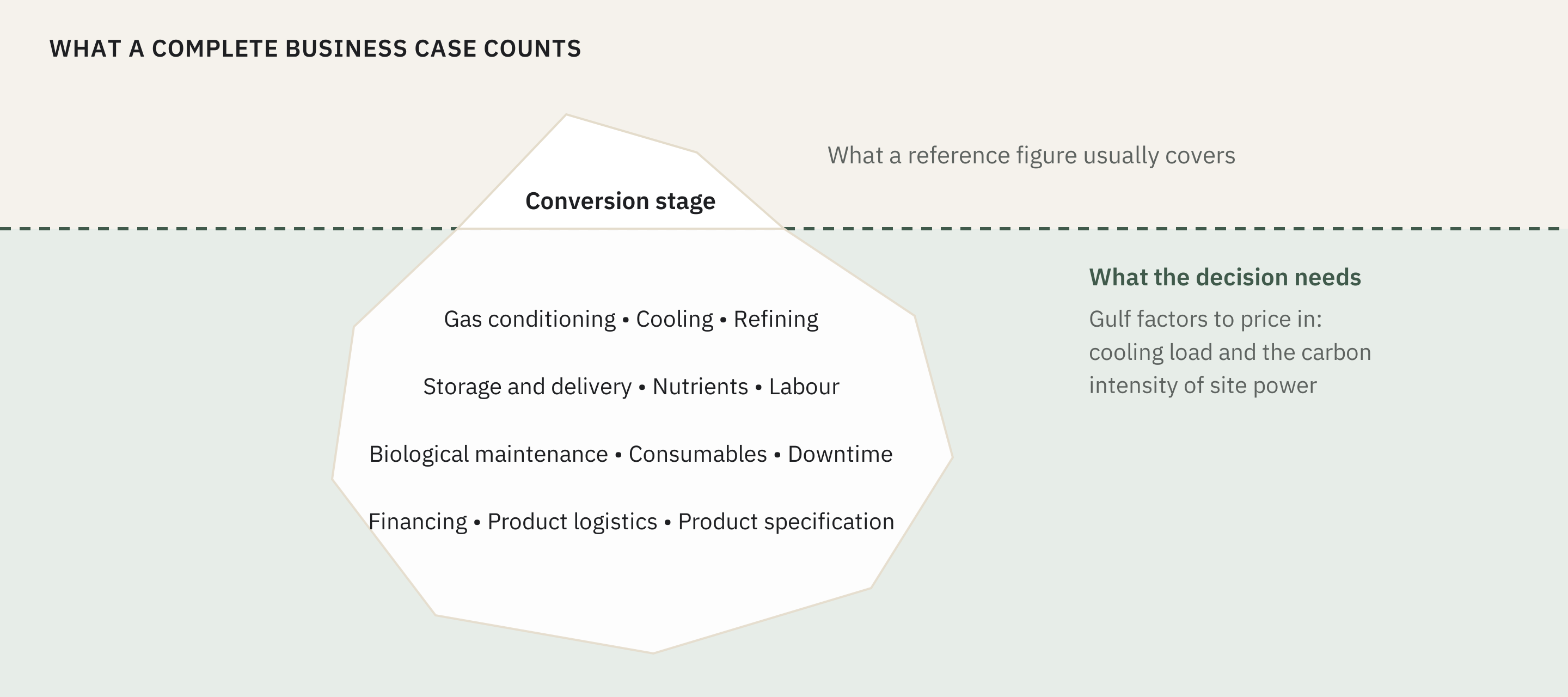
Figure 7. A reference figure is the tip. The investment decision needs the whole installation.
Text version
An iceberg illustrates the difference between a conversion-stage reference and the full installation. Include gas conditioning, cooling, refining, storage and delivery, nutrients, labour, biological maintenance, consumables, downtime, financing, product logistics and specifications. Gulf cooling demand and power carbon intensity can change the result.
- Energy across the full installation. In the Gulf, cooling load and the carbon intensity of site power can move both the cost and the climate result.
- A price a buyer has agreed to discuss. Oils need agreed composition and contaminant limits, oxygen a purity and delivery specification, recovered water a reuse assessment. Counting every output as simultaneous revenue overstates the case.
- Local incentives only. US tax-credit assumptions do not transfer to a GCC base case. Abu Dhabi's policy points toward tradable carbon certificates, but detailed rules are still to come: treat them as upside. [3]
What the evidence does not yet show
Supplier performance figures are reference values, not independently verified site results, and we are not aware of published field data for ALIUM in Gulf operating conditions. The research cited here uses different organisms, equipment and climates. Heat, dust, cooling demand and biological stability through a Gulf summer are exactly what a pilot has to establish. That is not a reason to avoid the technology. It is the reason to test it properly before scaling it.
A pilot designed to answer an investment question
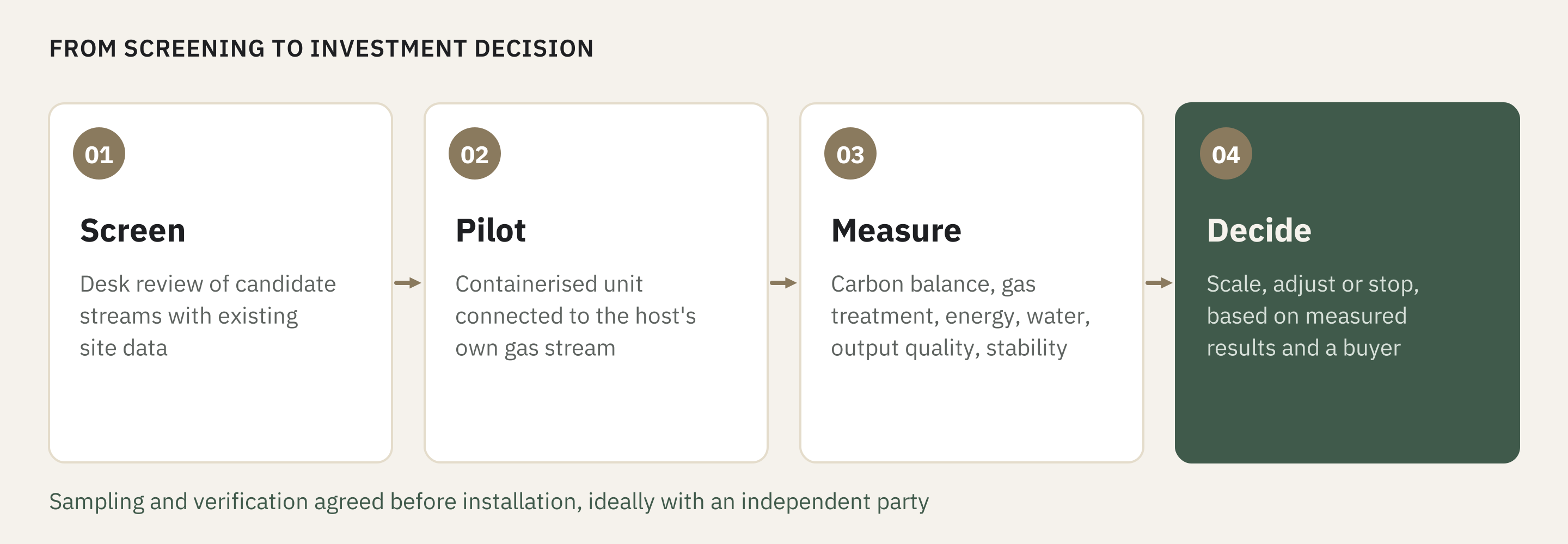
Figure 8. From screening to investment decision.
Text version
Four project stages: screen candidate streams using existing data; pilot a containerised unit on the host gas stream; measure carbon balance, gas treatment, energy, water, output quality and stability; then scale, adjust or stop on agreed criteria. Agree sampling and verification before installation.
A useful ALIUM pilot measures the inlet and outlet carbon balance, gas-treatment performance, energy and water use, output quality, biological stability and maintenance effort, across representative operating conditions.
Amanah works with host sites to screen candidate streams, design the pilot around the investment decision and coordinate delivery locally with SYKLEA. If you operate a stream you would like assessed, we would be glad to start with the data you already have.
THE EVIDENCE
Sources & further reading
- 01
- 02
- 03
- 04
- 05
- 06
- 07

